
Preface
This handbook is born from nearly two decades of conversations with our clients. Engineers ask us about technical specifications, solder joint reliability, and testing methodologies. Procurement professionals inquire about our lead times, cost structures, and supply chain resilience. Both share one common need: a trusted partner who understands that every PCB assembly services decision ultimately affects product success.
We wrote this guide to share what we have learned at Fuxin PCBA. Whether you are evaluating us or any other provider, we hope the frameworks and insights here serve your decision-making process.
Part 1: Understanding PCB Assembly
1.1 Why Your Choice of Assembly Partner Matters
At Fuxin PCBA, we have witnessed the electronics manufacturing industry face unprecedented challenges over our two decades of operation. Component shortages extend lead times unpredictably. Logistics disruptions test supply chain resilience. Quality requirements grow stricter as products become more sophisticated. In this environment, your PCB assembly partner is not merely a vendor but a critical extension of your own team.
From our experience, successful projects share one characteristic: close collaboration between technical and commercial considerations from the earliest stages. Specifications must align with cost realities. Delivery expectations must account for supply chain constraints. Quality standards must be clearly defined and mutually understood. This is the foundation of how we work at Fuxin PCBA.
1.2 What This Guide Covers
We have organized this handbook around the questions our clients ask us most frequently:
-
Technical capabilities: What assembly technologies do we offer, and which suit your specific requirements?
-
Quality systems: How do we ensure reliability, traceability, and compliance?
-
Service models: Should you choose our turnkey, partial turnkey, or consignment assembly services?
-
Evaluation frameworks: How can you objectively compare Fuxin PCBA against potential suppliers?
-
Project execution: What documentation, processes, and communications ensure smooth collaboration with us?
Each section provides practical information you can apply directly to your supplier evaluation and project planning.
Keywords: Fuxin PCBA, PCB assembly services, turnkey PCB assembly, prototype PCB assembly, SMT assembly services, through-hole assembly, box build assembly, PCBA supplier, electronics manufacturing services
Part 2: Fuxin PCBA Technical Capabilities
2.1 Our Core Assembly Technologies
Understanding fundamental assembly technologies helps you match your design requirements with our manufacturing capabilities.
Our Surface Mount Technology (SMT)
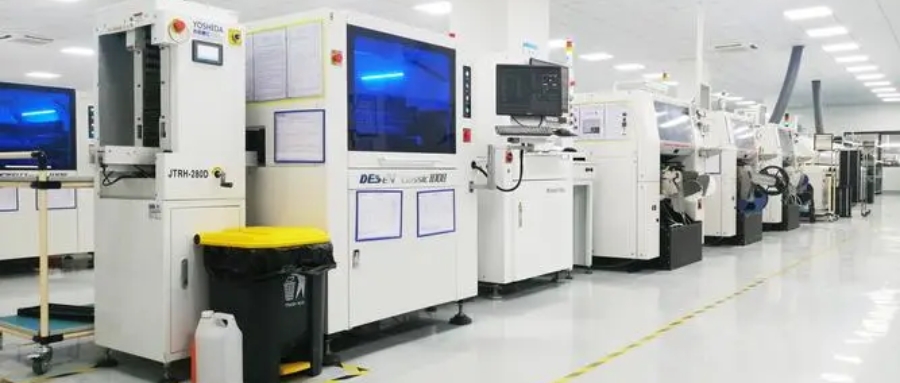
SMT is the predominant assembly method for modern electronics, and it is at the core of what we do at Fuxin PCBA. Components mount directly onto the PCB surface, enabling high-density designs and automated assembly.
Technical Specification: Our SMT lines utilize imported placement machines from Fuji and Yamaha, achieving ±0.01mm placement accuracy with CPK ≥1.33. This precision allows us to support component sizes down to 01005 (0.4mm × 0.2mm) and accommodate fine-pitch components down to 0.3mm pitch. Our placement speed reaches 25,000 CPH per line, ensuring efficient production across volumes.
For advanced applications requiring 008004 components (0.25mm × 0.125mm), we offer engineering consultations and development support through our advanced technology group. These components require specialized feeder systems and placement calibration, which we have qualified for prototype development.
Our Through-Hole Technology (THT)
Through-hole assembly remains essential for components requiring mechanical strength, high power handling, or specific form factors. At Fuxin PCBA, we have extensive experience with connectors, electrolytic capacitors, relays, and terminal blocks that typically require through-hole mounting.
Technical Specification: Our wave soldering equipment maintains solder pot temperature within ±2°C, conveyor speed accuracy within ±0.1 m/min, and preheat temperature uniformity across the board width. These parameters ensure consistent solder joint quality with through-hole fill rates exceeding 75% per IPC-A-610 Class 3 standards.
For prototypes and low volumes, our hand soldering team brings decades of combined experience to complex assemblies requiring manual attention. Our technicians are IPC-7711/7721 certified for rework and manual assembly.
Our Mixed Technology Assembly
Many PCBs combine SMT and through-hole components. At Fuxin PCBA, managing these mixed technology assemblies requires careful process planning to avoid compromising either technology’s integrity.
Technical Specification: Our typical mixed technology workflow places SMT components first using our standard reflow profile (peak temperature 245-250°C for lead-free, time above liquidus 60-90 seconds). Through-hole assembly follows using selective wave soldering or hand soldering, protecting fine-pitch SMT components from thermal stress. We have refined this process over thousands of mixed technology projects, achieving first-pass yields exceeding 98%.
2.2 Our Special Process Capabilities
Beyond standard assembly, certain applications require specialized processes. Fuxin PCBA has developed expertise in several areas:
Our Flex and Rigid-Flex Assembly
Flexible circuits present unique handling and assembly challenges. They require dedicated support fixtures during assembly, controlled temperature profiles to prevent material damage, and low-stress handling throughout the process.
Technical Specification: We employ custom aluminum or FR4 support tooling with vacuum fixturing to maintain dimensional stability during assembly. Our reflow profiles for flex materials use ramp rates ≤2°C/second and peak temperatures ≤235°C to prevent polyimide damage. We have assembled flexible circuits for wearable devices, medical sensors, and aerospace applications where space constraints demand three-dimensional packaging.
Our High-Voltage and Power Electronics Assembly
High-voltage assemblies demand careful attention to creepage and clearance distances, solder joint integrity, and thermal management.
Technical Specification: Our engineering team reviews high-voltage designs specifically for creepage distances per IEC 60950 requirements, ensuring minimum 2mm clearance for 250V applications. We implement conformal coating with dielectric strength >50 kV/mm for additional protection. For power electronics, we verify thermal management through thermal imaging during functional testing, identifying hot spots before shipment.
Our LED Assembly
LED assemblies often combine optical, thermal, and electrical requirements.
Technical Specification: Our processes accommodate various LED packages, including COB (chip-on-board) configurations requiring precise epoxy dispensing with ±0.1mm placement accuracy. For thermal management, we verify thermal interface material application and metal-core PCB attachment. Our optical testing includes color temperature verification (±200K tolerance) and lumen output measurement (±5% tolerance) for lighting applications.
2.3 Our Approach from Prototype Through Volume Production
Different project phases require different manufacturing approaches. At Fuxin PCBA, we have structured our services to support each stage effectively.
Our Rapid Prototyping Service
Prototype assembly prioritizes speed and flexibility.
Service Specification: Our typical lead times range from 24 to 48 hours for expedited services and 5 to 7 days for standard prototypes. Our engineering team reviews each prototype design within 24 hours of receipt, providing DFM feedback identifying potential issues before production begins. We support prototype quantities from 1 to 50 pieces with no NRE for standard processes.
Our Small to Medium Volume Production
As your projects transition from prototype to production, cost efficiency becomes increasingly important.
Service Specification: Our flexible production lines accommodate quick changeovers between different products, with typical changeover times under 30 minutes. This makes smaller production runs (50 to 5,000 pieces) economically viable. We offer volume pricing tiers at 100, 500, 1,000, and 5,000 pieces, with typical cost reductions of 15-25% at each tier.
Our High-Volume Production
High-volume production demands automated processes, rigorous quality control, and consistent repeatability.
Service Specification: Our production lines run continuously with automated optical inspection at multiple stages, real-time monitoring of process parameters via MES (Manufacturing Execution System), and statistical process control (SPC) with CpK monitoring. We maintain capacity for volumes up to 100,000 pieces monthly across multiple product configurations, with consistent quality metrics maintained throughout.
Keywords: Fuxin PCBA capabilities, SMT assembly specifications, through-hole assembly, flex PCB assembly, rigid-flex assembly, LED PCB assembly, high-voltage PCB assembly, rapid prototyping specifications, quick-turn PCB assembly, low-volume PCB assembly, high-volume PCB assembly
Part 3: Fuxin PCBA Quality Assurance Systems
3.1 Our Quality Philosophy
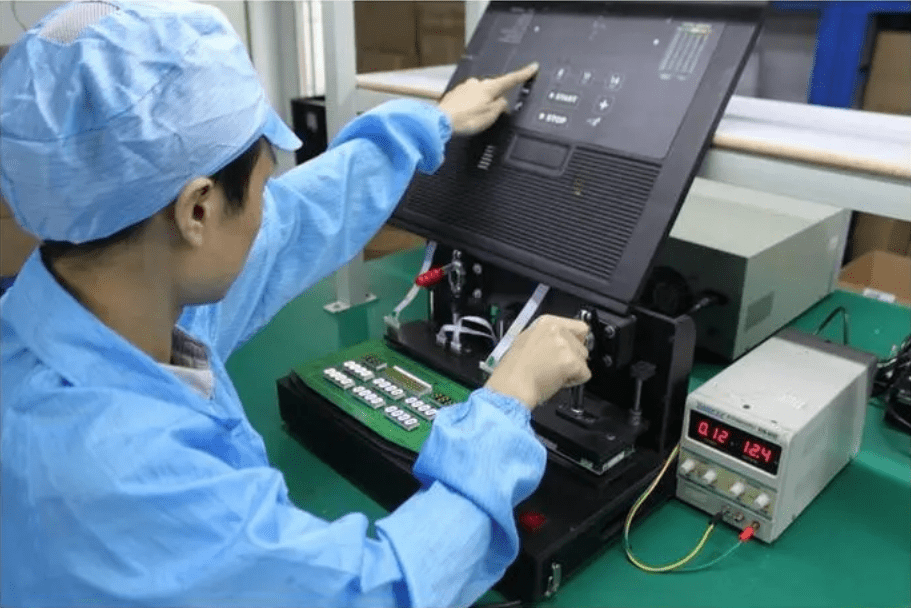
At Fuxin PCBA, we believe quality cannot be inspected into a product; it must be built in through controlled processes. This principle guides our entire quality system. Rather than relying solely on final inspection, we implement quality checks at every stage where defects could originate.
Quality Policy: We uphold a quality culture of “pursuing excellence,” and all team members are empowered to immediately halt production should any quality issues be detected. Our quality metrics are reviewed daily; in the event of any non-conformities, corrective actions are implemented within 24 hours..
3.2 Our Full-Process Quality Control
Our Incoming Inspection
Every component entering our facility undergoes inspection before release to production.
Inspection Criteria: We verify part numbers against your BOM, inspect physical condition per IPC-A-610 standards, and sample-test critical parameters using our component testing lab. Moisture-sensitive devices (MSL) receive appropriate preconditioning per IPC/JEDEC J-STD-033, including baking at 125°C for specified durations if shelf life has been exceeded. Our incoming inspection lot acceptance quality limit (AQL) is 0.4% for critical parameters.
Our Solder Paste Inspection (SPI)
Solder paste printing is among the most critical steps in SMT assembly.
Inspection Criteria: Our Koh Young 3D SPI systems measure paste volume, height, and area for every pad on every board. Acceptance criteria: height 50-150% of stencil thickness, area 75-125% of pad area, volume 50-150% of calculated target. Any pad outside these parameters triggers automatic alert and requires engineering review before proceeding. We maintain SPI first-pass yield targets >99.5%.
Our Automated Optical Inspection (AOI)
We employ both pre-reflow and post-reflow AOI across our production lines.
Inspection Criteria: Our 3D AOI systems achieve detection rates exceeding 99.5% for:
-
Component presence/absence
-
Polarity/orientation verification
-
Tombstoning (>25% lift)
-
Solder bridging (solder between adjacent pins)
-
Insufficient solder (<50% pad coverage)
-
Component offset (>25% off pad)
-
Lifted leads (>0.1mm elevation)
Pre-reflow inspection allows correction of misaligned components before soldering, with 100% of defects identified and corrected.
Our X-Ray Inspection
For hidden solder joints such as BGA, QFN, and connectors with under-terminal terminations, optical inspection cannot verify quality.
Inspection Criteria: Our Nordson DAGE X-ray systems provide 2D and 3D imaging capabilities. For BGA assemblies, we verify:
-
Void percentage (<25% per ball, <15% total per IPC-7095)
-
Solder ball shape (circular, consistent diameter)
-
Bridging (no connection between adjacent balls)
-
Head-in-pillow defects (partial wetting)
We inspect 100% of BGA assemblies on prototype runs and sample according to AQL 0.65 on production runs.
Our In-Circuit Testing (ICT)
ICT verifies that the assembled board matches your schematic electrically.
Test Coverage: Our in-house fixture design team develops custom ICT fixtures using Keysight and Test Research systems. Typical test coverage includes:
-
Continuity testing (opens/shorts detection)
-
Component value verification (resistors ±1%, capacitors ±10%, inductors ±5%)
-
Diode and transistor junction testing
-
Power supply verification (voltage levels, ripple)
Test program development typically requires 3-5 days, with fixture fabrication 5-7 days. We achieve test coverage of 85-95% depending on board access.
Our Functional Testing
Functional testing validates that the assembled board performs its intended functions.
Test Development: We work with you to develop test procedures and fixtures that simulate actual operating conditions. Our test engineering team develops custom test solutions including:
-
Microcontroller-based test fixtures
-
PC-controlled automated test equipment
-
Boundary scan (JTAG) testing for complex digital boards
-
RF testing with spectrum analyzers and network analyzers
-
Environmental chamber integration for temperature testing
All functional test results are logged with serial number traceability, providing complete documentation for each shipped board.
3.3 Our Environmental and Reliability Testing
Certain applications require verification of performance under extreme conditions.
Testing Capabilities:
-
Thermal cycling: Espec chambers, -40°C to +125°C, ramp rates up to 15°C/min, 1,000 cycles capability
-
Vibration testing: Sinusoidal and random vibration per MIL-STD-810 and ISO 16750, 5-2000 Hz
-
Salt spray testing: 48-96 hour continuous exposure per ASTM B117
-
Burn-in testing: 48-168 hour dynamic operation at elevated temperature (55°C typical)
-
Drop testing: 1.2m free fall, 26 drops per IEC 60068-2-32
-
Humidity testing: 85°C/85% RH, 1,000 hours per JESD22-A101
3.4 Our Quality Certifications
Fuxin PCBA’s quality systems are certified to international standards:
-
ISO 9001:2015 certified by SGS since 2010, scope: PCB assembly and testing services
-
ISO 13485:2016 certified by TÜV SÜD since 2015, scope: Medical device PCB assembly
-
IATF 16949:2016 certified by DNV since 2018, scope: Automotive electronics assembly
-
IPC membership since 2012, with compliance to IPC-A-610 Class 3 standards
-
UL recognized for select assembly processes (file number pending)
Our certificates are available for review upon request, and we welcome customer audits of our facilities.
Keywords: Fuxin PCBA quality system, SMT inspection specifications, AOI inspection criteria, X-ray inspection for BGA, ICT test coverage, functional testing, environmental testing, ISO 9001 certified, ISO 13485 certified, IATF 16949 certified
Part 4: Fuxin PCBA Service Models and Supply Chain Management
4.1 Our Assembly Service Models
Our Turnkey Assembly Service
In our turnkey assembly service, we handle both component sourcing and board assembly.
Service Specifications:
-
Procurement responsibility: Fuxin PCBA manages 100% of component sourcing
-
Pricing model: Component costs at our cost plus 12-15% handling fee, or fixed BOM pricing with 6-month price guarantee
-
Lead time: 10-15 days including component procurement (based on availability)
-
Minimum order quantity: 1 piece for prototype, 50 pieces for volume
-
Component verification: 100% verification against BOM, counterfeit detection testing on critical components
This model suits projects where simplifying supply chain management is a priority. Our global sourcing network and volume purchasing power typically achieve 5-15% better component pricing than individual buyers can obtain.
Our Partial Turnkey Assembly Service
Our partial turnkey arrangements split sourcing responsibilities.
Service Specifications:
-
Procurement responsibility: Client sources critical components, Fuxin sources standard components
-
Standard components we typically source: Passive components (resistors, capacitors), common connectors, commodity ICs, hardware
-
Critical components typically client-sourced: Custom programmed ICs, long-lead-time components, specified date code requirements, obsolescent parts
-
Coordination: We provide monthly availability reports for standard components, alert clients 60 days in advance of any supply issues
-
Inventory management: We consign client-supplied components in segregated, ESD-safe storage with 6-month consignment included
Our Consignment Assembly Service
With our consignment assembly service, you provide all components, and we perform only the assembly.
Service Specifications:
-
Material acceptance: We provide incoming inspection report within 48 hours of receipt, noting any discrepancies from BOM or physical damage
-
Storage conditions: ESD-safe, climate-controlled (18-22°C, 30-50% RH) segregated storage
-
Material consumption reporting: Daily consumption reports available via client portal
-
Excess material handling: Return of unused components within 15 days of order completion
-
Responsibility: Client assumes component risk; we provide insurance coverage for materials in our possession up to $50,000
4.2 Our Component Sourcing and Supply Chain Resilience
Our Global Sourcing Network
We maintain direct purchasing relationships with authorized distributors and franchised lines:
| Supplier Type | Partners | Benefits |
|---|---|---|
| Authorized distributors | Arrow, Avnet, DigiKey, Mouser, Future Electronics | Guaranteed authentic, manufacturer-direct pricing |
| Franchised lines | Amphenol, Murata, STMicroelectronics, Texas Instruments, Infineon, ON Semiconductor | Priority allocation, engineering samples |
| Independent testing | SMT Corporation, CIS (Counterfeit Identification Systems) | Counterfeit detection, suspect part verification |
Our Component Substitution Management
When specified components become unavailable, our engineering team follows a structured evaluation process:
-
Alternate identification: Search authorized distributor databases for form/fit/function alternatives
-
Technical evaluation: Compare datasheet parameters including electrical characteristics, thermal performance, and reliability ratings
-
Compatibility verification: Test sample quantities (minimum 5 pieces) in your application or test fixture
-
Documentation: Provide full substitution report with test results and recommendations
-
Approval process: Implement changes only with your written approval, documented in our quality system
Typical substitution evaluation requires 2-5 days depending on component complexity.
Our Inventory Management Services
For ongoing production programs:
-
Consignment stocking: Components held for your exclusive use for up to 12 months, with monthly aging reports
-
Buffer stock: We maintain 30-60 day buffer based on forecast, invoiced only when released to production
-
Kanban replenishment: Automated reorder points with 5-day replenishment for standard components
-
Obsolescence management: We monitor manufacturer PCNs and EOL notices, providing minimum 6-month advance notification of any impacted components
4.3 Our Lead Times and Cost Structure
Our Typical Lead Times
| Service Level | Lead Time | Price Multiplier |
|---|---|---|
| Expedited prototype | 24-48 hours | 2.0x standard |
| Standard prototype | 5-7 days | 1.0x |
| Volume production – first run | 15-20 days | 1.0x |
| Volume production – repeat | 10-15 days | 0.95x |
Our Cost Structure
| Cost Element | Typical Range | Calculation Basis |
|---|---|---|
| Component costs | BOM-dependent | Our cost + 12-15% handling, or fixed price |
| Stencil | $150-350 | One-time per design |
| Programming | $75-150 | One-time per machine type |
| Test fixture | $500-2,500 | One-time, depends on complexity |
| Setup/engineering | $100-400 | Per order, may be waived for repeat orders |
| Assembly labor | $0.015-0.05 per joint | Based on component count and type |
| Testing | $0.10-2.00 per board | Depends on test method |
| NRE for special processes | Quote basis | Conformal coating, potting, etc. |
Volume Pricing Tiers (typical labor cost reduction):
| Volume | Labor Cost Factor |
|---|---|
| 1-50 | 1.0x (prototype rate) |
| 51-500 | 0.85x |
| 501-2,000 | 0.70x |
| 2,001-10,000 | 0.55x |
| 10,000+ | 0.45x |
Keywords: Fuxin PCBA turnkey assembly, partial turnkey specifications, consignment assembly terms, component sourcing network, component substitution process, inventory management services, PCB assembly lead times, PCB assembly cost structure
Part 5: Our Supplier Evaluation Framework
5.1 Evaluating Our Technical Capabilities
Component Size Support
| Component Type | Our Capability | Qualification Method |
|---|---|---|
| 01005 (0.4×0.2mm) | Production, CPK≥1.33 | Monthly capability study |
| 008004 (0.25×0.125mm) | Engineering support | By project qualification |
| 0.3mm pitch QFP | Production, CPK≥1.33 | Quarterly capability study |
| 0.4mm pitch BGA | Production | 100% X-ray inspection |
| 0.35mm pitch CSP | Qualified | Sample inspection per lot |
Package Experience
| Package Type | Projects Completed | Typical Yield |
|---|---|---|
| BGA (0.8mm+ pitch) | 500+ | 99.8% |
| BGA (0.5-0.65mm pitch) | 200+ | 99.2% |
| QFN | 800+ | 99.5% |
| PoP (Package on Package) | 75+ | 98.5% |
| Flip chip | 25+ | 97.0% |
5.2 Evaluating Our Quality System
Our Inspection Equipment
| Equipment | Manufacturer | Model | Capabilities |
|---|---|---|---|
| 3D SPI | Koh Young | Zenith | 10µm resolution, 100% measurement |
| 3D AOI | Koh Young | Meister D | 12µm resolution, 99.5% detection |
| X-ray | Nordson DAGE | Quadra 7 | 2D/3D, 0.1µm resolution |
| ICT | Keysight | i3070 | 2,560 test points |
| Functional test | In-house designed | Custom | Per application |
Our Traceability System
Our MES (Manufacturing Execution System) maintains:
-
Component traceability: Manufacturer, date code, lot code, supplier
-
Process traceability: Machine used, operator, timestamp, process parameters
-
Inspection traceability: SPI/AOI/X-ray images, test results
-
Board-level traceability: Unique identifier per board (QR code or silkscreen)
5.3 Evaluating Our Service Responsiveness
Our Performance Metrics
| Metric | Our Performance | Industry Benchmark |
|---|---|---|
| Quotation response time | <4 hours (93% of requests) | <24 hours |
| DFM feedback time | <24 hours (89% of projects) | <48 hours |
| On-time delivery | 98.5% (last 12 months) | 95% |
| First-pass yield | 97.2% average | 95% |
| Customer complaint response | <24 hours (100%) | <48 hours |
| Corrective action completion | <5 days average | <10 days |
Keywords: Fuxin PCBA technical specifications, component size capability, package experience, inspection equipment list, traceability system, performance metrics
Part 6: Our Project Startup Guide
6.1 Required Documentation Specifications
Bill of Materials (BOM) Format
We accept BOMs in Excel, CSV, or PDF format with the following required fields:
| Field | Required | Format Example |
|---|---|---|
| Item number | Yes | 1, 2, 3… |
| Designator | Yes | R1, R2, C1, U1 |
| Manufacturer part number | Yes | CRCW040210K0FKED |
| Manufacturer | Yes | Vishay |
| Description | Yes | Resistor, 10kΩ, 1%, 0402 |
| Quantity per board | Yes | 2 |
| Reference | No | BOM revision A |
We accept RS-274X format with the following required layers:
-
Top copper (.GTL)
-
Bottom copper (.GBL)
-
Top solder mask (.GTS)
-
Bottom solder mask (.GBS)
-
Top silkscreen (.GTO)
-
Bottom silkscreen (.GBO)
-
Drill file (.TXT or .DRL)
-
Drill drawing (.GDD – optional but helpful)
Pick and Place File Format
We accept CSV or ASCII format with:
-
Designator
-
X position (mm)
-
Y position (mm)
-
Rotation (degrees)
-
Top/Bottom side
6.2 Our Design for Manufacturing Specifications
Pad Design Recommendations
| Component Type | Recommended Pad Design |
|---|---|
| Chip components (0402) | Pad width = component width + 0.1mm, length = component length + 0.2mm |
| Chip components (0603+) | Pad width = component width + 0.2mm, length = component length + 0.3mm |
| SOIC | Pad width = 0.6mm, length = 2.0mm, pitch per datasheet |
| QFP | Pad width = 0.25mm (for 0.5mm pitch), length = 1.5mm |
| BGA | Pad diameter = ball diameter × 0.8 (NSMD), solder mask defined optional |
Component Spacing Requirements
| Component Type | Minimum Spacing |
|---|---|
| Chip to chip | 0.3mm |
| Chip to tall component | 1.0mm |
| Through-hole to SMT | 2.0mm |
| Board edge to component | 1.5mm |
| Test point diameter | 0.9mm minimum |
| Test point spacing | 1.27mm minimum |
Panelization Specifications
| Parameter | Recommendation |
|---|---|
| Panel size | ≤ 250mm × 300mm for standard lines, ≤ 610mm × 510mm for large format |
| Tooling holes | 3.0mm diameter, 4 holes minimum |
| Fiducials | 1.0mm diameter, copper exposed, 3 per panel minimum |
| Breakout method | V-groove for straight edges, tab-routed with mouse bites for irregular shapes |
| Edge clearance | 5mm minimum clearance from board edge to components for assembly rails |
Keywords: Fuxin PCBA documentation requirements, BOM format, Gerber file specifications, pick and place format, DFM guidelines, pad design specifications, component spacing, panelization guidelines
Part 7: Our Industry Applications and Case Studies
7.1 Medical Electronics Case Study
Application: Patient monitor mainboard
-
Board specifications: 8-layer, 150mm × 200mm, 1,200 components, 0.5mm pitch BGA
-
Requirements: ISO 13485 compliance, full traceability, 100% functional test, 10-year component availability
-
Our solution: Turnkey assembly with component sourcing verified for 10-year availability, 100% X-ray for BGAs, functional test with patient simulation
-
Outcome: 99.7% first-pass yield, 100% on-time delivery over 3 years, successful FDA audit support
7.2 Automotive Electronics Case Study
Application: ECU for electric vehicle battery management
-
Board specifications: 6-layer IMS (Insulated Metal Substrate), -40°C to +125°C operation, 850 components
-
Requirements: IATF 16949, PPAP Level 3, 100% ICT and functional test, 15-year lifetime
-
Our solution: IATF 16949 compliant process, PPAP documentation package including FMEA, control plan, capability studies, 100% thermal cycling sample test
-
Outcome: Zero defects over 50,000 units shipped, Tier 1 supplier award
Keywords: Fuxin PCBA medical electronics case study, automotive PCB assembly case study, aerospace PCB assembly, industry applications
Part 8: Frequently Asked Questions – Professional Answers
Technical Questions
Q: What is the smallest component size Fuxin PCBA can assemble?
A: Fuxin PCBA has production capability for 01005 components (0.4mm × 0.2mm) with process capability index (Cpk) ≥1.33, verified through monthly capability studies. For 008004 components (0.25mm × 0.125mm), we offer engineering consultation and development support through our advanced technology group. These components require specialized feeder systems, placement calibration within ±15µm, and stencil design with 0.075mm thickness. We have successfully completed prototype assemblies for three clients requiring 008004 components and can support development projects with appropriate NRE agreements.
Q: How does Fuxin PCBA ensure BGA solder joint quality?
A: Fuxin PCBA employs a multi-layered approach to BGA quality assurance:
-
Process control: Our reflow profiles are optimized specifically for each BGA type, with ramp rates ≤2°C/second, time above liquidus (TAL) 60-90 seconds, and peak temperature 240-245°C for lead-free alloys
-
X-ray inspection: 100% of BGA assemblies undergo 3D X-ray inspection using our Nordson DAGE Quadra 7 system. Acceptance criteria per IPC-7095: voiding <25% per ball, <15% total for array, no bridging, no head-in-pillow defects
-
Sample cross-sectioning: For new BGA types or process qualification, we perform cross-sectioning with microscopic analysis to verify intermetallic formation and solder joint integrity
-
Thermal cycling validation: For critical applications, we offer sample thermal cycling (-40°C to +125°C, 500 cycles) with pre/post X-ray comparison
Our BGA assembly first-pass yield averages 99.2% across all projects, with 99.8% for 0.8mm+ pitch devices.
Q: What special considerations does Fuxin PCBA apply to flex board assembly?
A: Flexible circuit assembly at Fuxin PCBA follows specific protocols developed through 200+ flex assembly projects:
-
Support tooling: Custom aluminum or FR4 carrier fixtures with vacuum hold-down maintain dimensional stability during assembly. Tooling includes relief areas under components to prevent stress during placement.
-
Temperature management: Reflow profiles for polyimide flex materials use ramp rates ≤2°C/second and peak temperatures ≤235°C (versus 245°C for rigid boards). Soak times extended by 20-30 seconds to ensure adequate flux activation without material degradation.
-
Handling procedures: Automated handling uses edge-grip conveyors rather than belt conveyors. Manual handling requires ESD-safe gloves and support underneath the flex at all times.
-
Test fixture design: Flex test fixtures include backing plates and compliant pogo pins to prevent flexing during test.
We achieve first-pass yields of 96-98% on flex assemblies, with the majority of defects related to handling damage rather than solder joint quality.
Q: How should I choose between lead-free and leaded assembly at Fuxin PCBA?
A: The choice between lead-free and leaded assembly depends on multiple factors. Fuxin PCBA supports both processes and offers the following guidance:
Lead-free assembly (SAC305: 96.5%Sn/3.0%Ag/0.5%Cu) is recommended when:
-
Products will be sold in EU markets requiring RoHS compliance
-
Operating temperatures are below 100°C
-
High tin whisker resistance is required (lead-free alloys inherently resist whisker formation)
-
Environmental certifications are required (RoHS, WEEE, REACH)
Process specifications: Peak temperature 245-250°C, TAL 60-90 seconds, ramp rate ≤3°C/second
Leaded assembly (Sn63/Pb37) is recommended when:
-
Products are exempt from RoHS requirements (medical, aerospace, military)
-
Operating temperatures exceed 100°C (leaded solder has better thermal fatigue resistance)
-
Field reliability data exists for leaded but not lead-free in your application
-
Tin whisker risk must be absolutely eliminated (leaded solder does not form whiskers)
Process specifications: Peak temperature 215-225°C, TAL 45-75 seconds, ramp rate ≤3°C/second
Fuxin PCBA maintains separate production lines for lead-free and leaded assembly to prevent cross-contamination. We can advise based on your target markets, reliability requirements, and cost considerations. Note that leaded assembly typically costs 5-10% more due to material costs and regulatory compliance overhead.
Procurement Questions
Q: What are Fuxin PCBA’s minimum order quantities?
A: Fuxin PCBA’s minimum order quantities are structured to accommodate projects at any stage:
| Order Type | Minimum Quantity | Notes |
|---|---|---|
| Prototype orders | 1 piece | Standard prototype pricing applies |
| Engineering samples | 5-10 pieces | Recommended for validation |
| Low-volume production | 50 pieces | Standard volume pricing begins |
| Medium-volume production | 500 pieces | Volume pricing tier applies |
| High-volume production | 2,000+ pieces | Best pricing, scheduled releases |
For consignment assembly (client-provided materials), the same MOQs apply. For turnkey assembly, component availability may impose practical minimums (e.g., reel quantities for certain components). We work with clients to optimize order quantities balancing cost and flexibility.
Q: How quickly can Fuxin PCBA deliver assembled boards?
A: Fuxin PCBA offers three service levels with guaranteed lead times:
| Service Level | Lead Time | Availability | Price Factor |
|---|---|---|---|
| Expedited prototype | 24-48 hours | Components in stock | 2.0x standard |
| Standard prototype | 5-7 days | Standard lead time | 1.0x |
| Production – first run | 15-20 days | Includes component procurement | 1.0x |
| Production – repeat | 10-15 days | Components stocked or available | 0.95x |
Lead time guarantees are subject to:
-
Component availability (we verify within 4 hours of quote)
-
Board complexity (standard technology, no special processes)
-
Current capacity (typically 85% utilization, 15% reserved for quick-turn)
For expedited prototypes, we guarantee 24-hour shipment for simple boards (<100 components, double-sided) and 48-hour for complex boards, or the order is free.
Q: Should I source components myself or use Fuxin PCBA’s turnkey service?
A: This decision impacts cost, control, and risk. Based on our experience with thousands of projects, here is a quantitative framework:
| Factor | Self-Source | Turnkey (Fuxin PCBA) |
|---|---|---|
| Component cost | Your negotiated price | Our cost + 12-15% handling |
| Procurement overhead | Your team’s time | Included in handling fee |
| Risk of counterfeit | You bear detection cost | We provide testing at no additional cost |
| Shortage management | You monitor and expedite | We monitor and provide 60-day alerts |
| Inventory holding | Your facility cost | Consignment available at no cost for 6 months |
| Single point of accountability | Multiple vendors | Single invoice, single contact |
Cost comparison example (1,000-board project, $15,000 BOM cost):
| Cost Element | Self-Source | Turnkey |
|---|---|---|
| Component cost | $15,000 | $15,000 |
| Purchasing labor (20 hours @ $50) | $1,000 | $0 |
| Incoming inspection (10 hours @ $40) | $400 | $0 |
| Counterfeit detection (sampling) | $500 (if required) | $0 |
| Expedited shipping (if shortages) | $500 (typical) | $0 |
| Inventory carrying (60 days @ 10%) | $250 | $0 |
| Fuxin handling fee (12%) | $0 | $1,800 |
| Total | $17,650 | $16,800 |
In this typical scenario, turnkey saves $850 (5%) while eliminating procurement work. For specialized or critical components where you have unique relationships, partial turnkey offers the optimal balance.
Q: What happens to unused components after production at Fuxin PCBA?
A: Fuxin PCBA offers three options for unused components, which we document in our quality system:
-
Consignment storage: Components are sealed in ESD bags, labeled with your project information, and stored in our segregated consignment area. Storage conditions: 18-22°C, 30-50% RH, ESD-protected. We provide monthly inventory reports and will apply these components to future orders automatically. Storage is free for up to 6 months; after 6 months, a nominal $50/month storage fee applies.
-
Return to client: Components are packaged with packing list and returned via your preferred carrier within 15 days of order completion. Return shipping is at client expense. We recommend this for components with limited shelf life or when future orders are uncertain.
-
Credit toward future orders: For standard components we regularly use, we may offer credit at 80% of original cost (subject to inspection) applied to your next order within 12 months.