
Table of Contents
ToggleAs PCBA designs become denser and more complex—especially with the rise of BGA and fine-pitch packages—traditional test methods like In-Circuit Testing (ICT) are hitting a physical wall. You simply can’t fit a physical probe onto every node. This is where boundary scan testing comes in. By leveraging the built-in test circuitry of compatible devices (IEEE 1149.1), boundary scan provides a powerful “virtual probe” to check electrical connections without physical contact.
At Fuxin PCBA, we help hardware teams integrate boundary scan into their testing strategy to reduce fixture costs and improve fault coverage. This guide explains what it is, how it works, and how to build it into your design for maximum ROI.
What is Boundary Scan Testing and How Does It Work?
What is boundary scan? It is an embedded testing technique that lets test equipment control and observe supported device pins through a JTAG (Joint Test Action Group) interface.
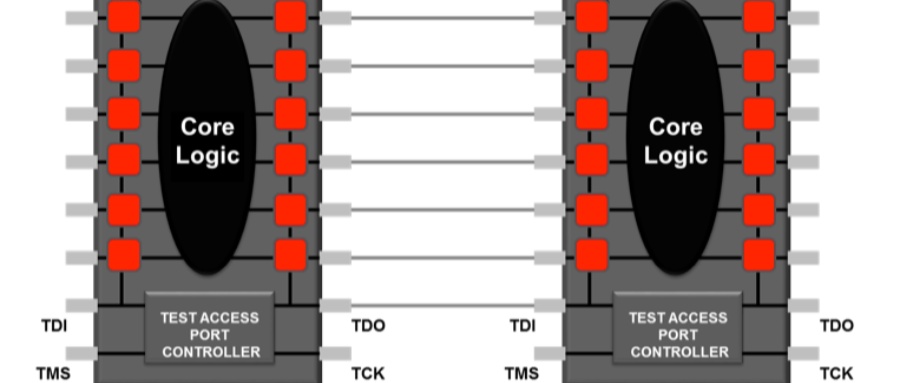
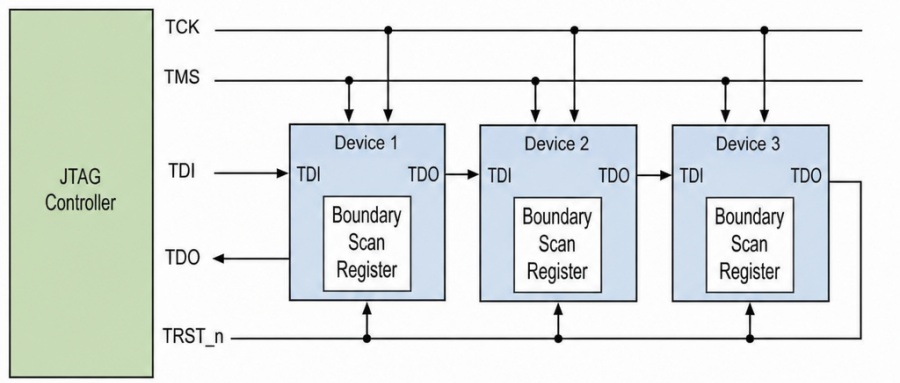
Boundary cells sit between the device’s functional circuitry and its external connections. During testing, these cells apply digital patterns and capture responses. A scan chain connects compatible devices serially, using four key signals:
TCK: Test Clock
TMS: Test Mode Select
TDI: Test Data In
TDO: Test Data Out
Why does this matter? Because it allows you to test hidden connections under BGA packages without needing physical access to the solder balls.
Not sure if your board is ready for boundary scan? Send your schematic and BOM for a free DFT (Design for Test) review. We will check your JTAG chain and identify coverage gaps before you commit to tooling.
How to Test BGA Solder Joints with Boundary Scan
How to electrically test BGA signal connections? Use the boundary scan cells to drive patterns through the board interconnects and capture responses at the other end.
Consider two boundary-scan-enabled devices joined by digital nets. The test software drives patterns from one device and reads the other, looking for mismatches (opens or shorts). The diagnostic result identifies suspect connections, guiding your engineers to the exact failure point.
Crucial Limitation: Boundary scan verifies electrical connectivity, but it does not measure solder shape or voiding. For physical defects like voids or head-in-pillow, you must combine boundary scan with X-ray inspection. They answer different questions: one tests electrical behavior, the other inspects physical structure.
Boundary Scan vs. ICT vs. Flying Probe: Which is Best?
How to choose the right testing method? It’s rarely about choosing one over the others; it’s about complementary coverage.
Choosing the right method is rarely about picking one winner—it’s about building a complementary testing strategy. Here is how the three main methods compare:
1. Boundary Scan
Access Approach: Built-in device circuitry (Virtual probe)
Best For: Hidden digital interconnects, BGA packages, and high-density boards.
Planning Constraint: Requires compatible ICs (IEEE 1149.1) and obtaining accurate BSDL files from the manufacturer.
2. In-Circuit Test (ICT)
Access Approach: Physical probes (Bed-of-nails fixture)
Best For: Accessible components, analog measurements (resistance, capacitance), and high-volume production.
Planning Constraint: High fixture cost and lead time; requires physical test pads to be designed into the PCB.
3. Flying Probe
Access Approach: Moving physical probes
Best For: Prototypes, low-volume production, and simple boards.
Planning Constraint: Slower test speed compared to ICT; limited only to physically accessible nodes on the board.
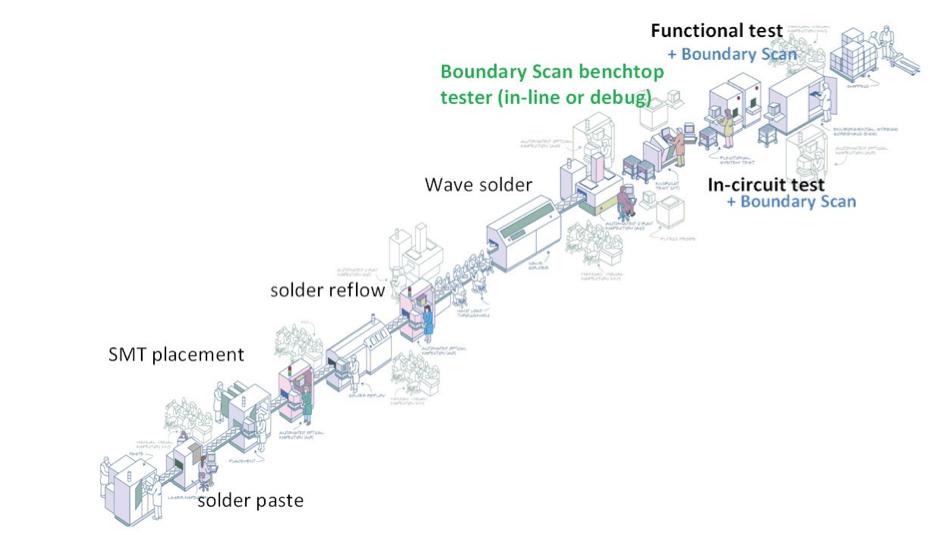
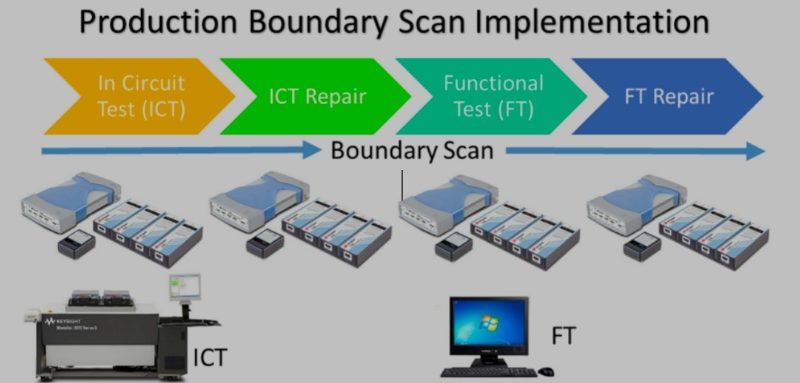
Why use a hybrid strategy? Because removing test pads to save board space can create an expensive diagnostic gap. A smart strategy uses boundary scan for dense digital areas and ICT or flying probe for analog circuits.
Ready to optimize your test strategy?
Our engineering team will help you combine boundary scan, AOI, and X-Ray for maximum coverage at minimum cost.
[ Request a PCBA Testing Quote ] (Send your Gerber files and test requirements today).
How to Build Testability into Your PCBA Design (DFT)
Why does DFT matter for boundary scan? Because if you don’t plan for it, your chain will fail. To ensure a seamless transition from design to production, it’s highly recommended to conduct a DFM/DFT review early in the process.
How to ensure your board is ready?
Confirm Device Support: Verify that your microcontrollers and FPGAs support IEEE 1149.1.
Get BSDL Files: Obtain the Boundary Scan Description Language files from the component manufacturer. These describe the device’s test architecture.
Check the Chain: Verify signal levels, chain order, and that TDI/TDO are routed correctly.
Retain Targeted Access: Don’t remove all test pads. Keep physical access for nets that boundary scan cannot cover.
For deeper implementation details on scan chain verification and test model matching, refer to the Corelis boundary scan DFT guidelines.
Note: Programmable devices (like FPGAs) may require modified BSDL information once configured. Always ensure your test models match the final assembly.
Why Does Boundary Scan Help Reduce PCBA Testing Costs?
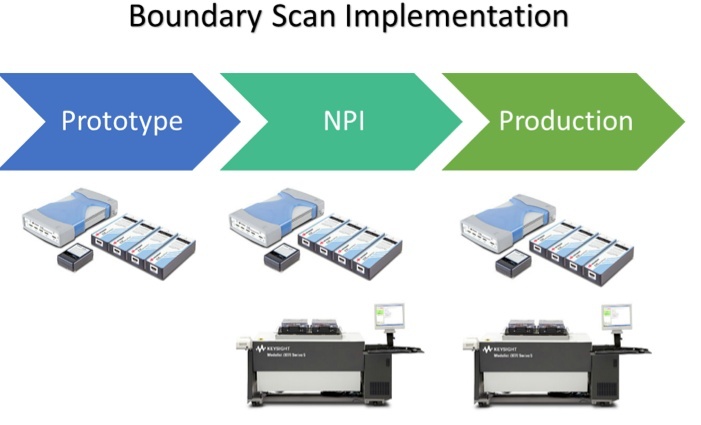
Boundary scan reduces costs by replacing some physical access requirements (like expensive bed-of-nails fixtures) and allowing test procedures to be reused across development and production.
However, savings are not automatic. You must factor in the cost of test development, JTAG controllers, software integration, and maintenance. For high-density, low-to-medium volume boards, the elimination of fixture costs often makes boundary scan highly economical.
Apply Coverage Limits to Medical PCBA Projects
When specifying a JTAG test for medical PCBA, describe the targeted faults explicitly. Boundary scan tests digital interconnects; it does not directly measure analog voltages or resistor values (e.g., proving a resistor connects two nets doesn’t mean its resistance is correct).
Keep connectivity results separate from broader product-performance claims. Always ask your test provider to identify exclusions and complementary measurements.
Frequently Asked Questions
Yes. You must confirm that your chips support IEEE 1149.1, obtain their BSDL files, and route the TCK, TMS, TDI, and TDO signals to a single JTAG header.
No. Boundary scan is for digital interconnects. Analog components (resistors, capacitors, op-amps) require ICT, flying probe, or functional testing.
Coverage depends on the number of JTAG-compatible chips. On a typical board, it can cover 60-85% of digital nets. Combined with other test methods, total coverage can exceed 95%.
When should I choose flying probe instead of boundary scan?
For simple, low-density boards with low volume, flying probe is flexible and avoids high fixture costs. For high-density BGA boards, boundary scan is faster and more reliable.
Yes. Our engineering team offers a free DFM/DFT review to ensure your design supports efficient testing and to help you avoid costly test gaps.
Ready to Optimize Your PCBA Testing Strategy?
Don’t let testing bottlenecks slow down your production. Send your Gerber files, BOM, and specific testing requirements to Fuxin PCBA. Our engineering team will help you combine boundary scan, AOI, and X-ray for maximum coverage at minimum cost.
[ Request a PCBA Testing Quote ] (We respond within 3 business days).
Explore our high-reliability PCBA assembly and testing capabilities: [ PCB Assembly Services ]