
Table of Contents
ToggleDeveloping a medical device is a high-stakes endeavor. Unlike consumer electronics, a failure in a medical PCBA isn’t just an inconvenience—it can directly impact patient safety and clinical outcomes. From navigating strict FDA regulations to ensuring every component is fully traceable, the gap between a working prototype and a compliant, production-ready medical device is vast.
At Fuxin PCBA, we work closely with medical OEMs and hardware startups to bridge this gap. This article breaks down the essential considerations you need to review before selecting a supplier or moving your medical design into full-scale production.
What is Medical PCBA, and Why Does the Distinction Matter?
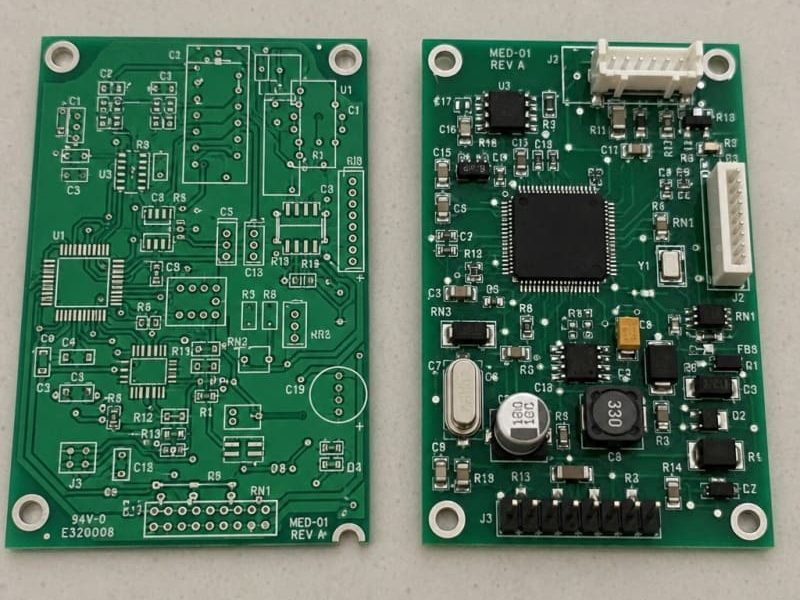
What is medical PCBA? It is a printed circuit board assembly specifically designed and manufactured for a medical application. It goes far beyond a bare PCB; it includes the components, the soldered connections, and the documentation that proves the board functions safely.
Why does this matter for buyers? Because the regulatory burden falls on you, the device manufacturer. You must treat board fabrication, component procurement, assembly, and device-level verification as separate responsibilities connected by strict, controlled documentation.
Before starting production, ask your supplier: Who owns each manufacturing stage? Which records accompany the delivery? How do we handle discrepancies? Don’t assume that a supplier who builds excellent automotive boards automatically understands the risk management required for medical devices.
How to Align Quality Requirements with the Finished Device
Your PCBA supplier’s quality system must support your finished device’s quality system. In the US, the FDA’s Quality Management System Regulation (QMSR) became effective on February 2, 2026, incorporating ISO 13485:2016 by reference.
How to ensure your supplier is up to par?
- Verify the Scope: Don’t just look at a certificate logo. Ask for the actual quality documentation and verify which specific site, services, and activities are covered.
- Establish a Quality Agreement: Define exactly how document control (revisions), change notifications (PCNs), nonconforming materials, and record access will be managed.
Note: Always consult your regulatory team to confirm the requirements for your specific device and market.
Need a manufacturing partner who understands ISO 13485 and FDA QMSR requirements? Speak with our medical engineering team to ensure your project is built on a compliant foundation.\
How to Use Risk Analysis to Drive Design Decisions
Why does medical PCB assembly need attention before the layout is even finished? Because risk controls and production evidence must be planned from day one. ISO 14971 outlines a lifecycle process for identifying hazards and implementing controls.
How to translate this into your design review:
- Identify which board functions support critical device behaviors (e.g., a patient monitor’s signal integrity).
- Determine what failures could affect those functions.
- Record unresolved issues before authorizing production.
The Role of Signal Integrity in Sensitive Layouts
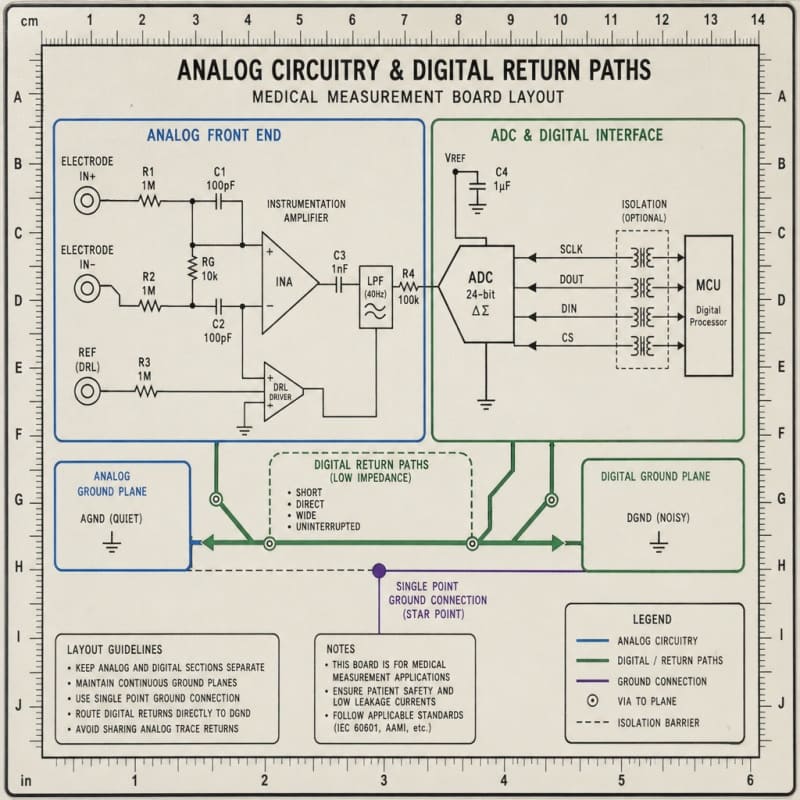
Sensitive analog circuits (like those reading biosensors) require meticulous layout. Following guidelines like those from Texas Instruments (e.g., for the ADS129x family), you must manage low-impedance grounding and prevent digital return currents from corrupting sensitive analog signals. Ask your designer to explain the return-current routes during the design review.
Component Sourcing: How to Manage Changes Safely
How to manage the supply chain without compromising safety? Build your procurement review around the approved Bill of Materials (BOM).
- Sourcing Channels: Require the supplier to purchase strictly from authorized distributors (like Digi-Key, Mouser, or Arrow).
- The “Medical Grade” Myth: Don’t accept vague assurances. Ask for evidence (lot tracking, incoming inspection reports).
- Substitutions: Never let a purchasing agent make a silent substitution. Any alternative part must go through your engineering risk-management process, evaluating electrical behavior, firmware interactions, and required verification.
For long-term programs, request an obsolescence plan. This outlines who monitors End-of-Life (EOL) notices and who authorizes last-time buys.
How Should Medical PCBA Be Inspected and Tested?
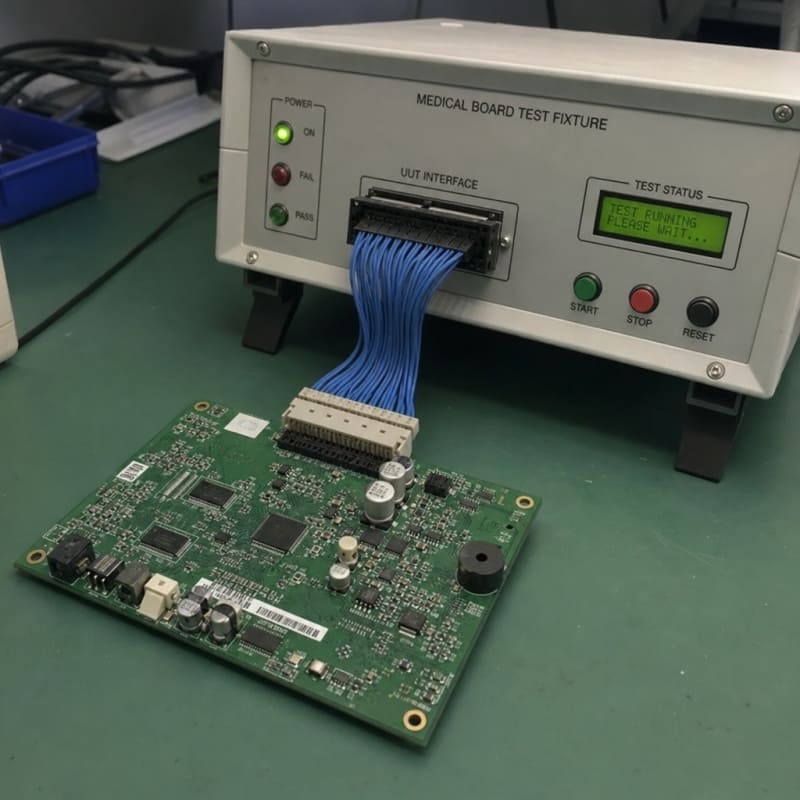
Medical PCBA must be inspected against agreed workmanship standards (like IPC-A-610 or J-STD-001) and tested against specific electrical criteria.
When reviewing the test plan, ensure you cover:
- Inspection Objectives: What methods (AOI, X-Ray) are used for specific assembly conditions?
- Electrical & Functional Checks: What are the exact test limits, operating modes, and fault responses?
- Test Equipment: Who owns the test fixtures? How is configuration controlled?
- Failure Handling: How are failures investigated, repaired, and retested?
Crucial Detail: For X-ray inspection of BGAs, establish separate acceptance criteria, as IPC-A-610 does not provide specific X-ray criteria. Always ask for a sample test report to ensure it can be traced back to the specific board revision.
Ready to move your medical device into production?
We provide rigorous AOI, X-Ray, and functional testing, backed by full lot-level traceability.
[ Request a Medical PCBA Quote ] (Send your Gerber, BOM, and testing requirements).
Compare Suppliers Through Evidence, Not Promises
How to evaluate a PCBA supplier like Fuxin PCBA? Give every candidate the same project package and ask the same questions.
- Request a Record Walkthrough: Ask them to walk you through a sample manufacturing record (with sensitive data redacted)—from incoming material, through assembly, to final release.
- Expose Scope Differences: Compare quotes carefully. Does a “cheaper” quote exclude tooling, test development, or engineering support?
- Run a Pilot Build: Before scaling, run a small batch. Use it to evaluate their communication, change handling, and documentation as much as their board quality.
Frequently Asked Questions
While your contract manufacturer may not hold the final device certification, their quality management system should be aligned with ISO 13485 standards to ensure traceability, process control, and documentation suitable for your FDA submission.
We source components from authorized distributors. We review the specific application and requirements with you, ensuring any alternates are approved through your engineering change process before purchase.
We maintain lot-level tracking for components, document machine parameters (like reflow profiles), and link inspection records directly to the specific board serial number or batch.
IPC Class 3 has stricter acceptance criteria for solder joints, plating, and inspection. While many medical devices require Class 3, the specific class should be determined by your device’s risk analysis and regulatory requirements
Yes. We support medical device teams from engineering validation builds and pilot runs to medium-volume production.