
Finding a reliable PCBA supplier in China is rarely just about comparing the lowest unit price. It is about finding a manufacturing partner who understands your design intent, manages component sourcing risks, and provides a transparent, documented production process. Whether you are an engineer preparing a prototype for validation or a purchasing manager scaling a product to mass production, a poorly chosen supplier will cost you weeks of delay and expensive re-spins. This guide will help you define your manufacturing scope, evaluate supplier responses, and prepare a quotation request that gets you accurate answers.
Table of Contents
ToggleWhat Should You Expect From a PCBA Supplier in China?
What is the difference between a good supplier and a great one? It comes down to how they handle the details before production begins. A professional PCBA supplier will not just accept your files blindly; they will provide a project-specific response that identifies the proposed manufacturing scope, required documentation, and acceptance criteria.
Expect a supplier to ask clarifying questions about your board’s intended use. For a prototype, speed and DFM (Design for Manufacturability) feedback matter most. For repeat production, strict revision control and supply chain stability are critical. Ask the supplier to identify unresolved questions before you approve purchasing or production.
Define Your PCB Assembly Services: How to Structure the Scope
How to avoid the “full service” trap? Break your request down into specific work areas. For a true one-stop PCBA supplier in China, ask which activities are performed in-house, which involve third parties, and who remains accountable for the final delivery.
Use these core service areas to structure your discussion:
PCB Fabrication: Provide board production data. Ask the supplier to confirm the stack-up and flag any proposed changes.
Component Procurement: Identify approved manufacturer part numbers (MPNs) and the approval route for substitutions.
PCB Assembly: Supply assembly instructions and highlight any parts that must not be fitted (DNP).
Inspection & Testing: Define the workmanship criteria (e.g., IPC Class 2 or 3) and the exact test records you expect.
Final Handover: Agree on packaging, labeling, and who is authorized to release the shipment.
If you are sourcing PCB fabrication separately from assembly, name the owner of each handoff. Always require written confirmation of which board revision the assembly provider will receive.
Why Component Sourcing Transparency Matters
Why does component sourcing deserve its own review? Because the global electronic component market is full of counterfeit, modified, or improperly stored parts. For critical components like TI (Texas Instruments) chips, buying outside the authorized distribution network is a massive risk.
When evaluating a supplier, ask them to address:
Source Approval: Identify the purchasing channel (e.g., Digi-Key, Mouser, Arrow) and flag exceptions before ordering.
Substitutions: Require written engineering approval before changing any specified part. Ask for the datasheet of the proposed alternative.
Order Records: Agree on the sourcing documentation you need retained for traceability.
Never leave a substitution decision until production is waiting. If a connector is unavailable, request a documented review of the replacement rather than accepting “equivalent” as sufficient approval.
How to Make Quality Requirements Part of the Order
How to turn quality expectations into written acceptance requirements? Do not just ask for “IPC quality” without further definition. Specify exactly what standard applies to your board.
Acceptance Criteria: Name the agreed standard (such as IPC-A-610 or J-STD-001), the revision, and the class (Class 2 for standard electronics, Class 3 for high-reliability).
Functional Checks: Provide operating instructions, test conditions, and explicit pass/fail limits.
Nonconforming Assemblies: Agree on the notification, review, and rework approval process.
For example, if a controller must complete a defined power-up sequence, include that sequence and the required result in its test instructions. Ask the supplier to distinguish between requested functional checks and workmanship inspections.
Ready to move from design to production?
Send your Gerber files, BOM, and target quantity to our engineering team.
Prepare a Clear Manufacturing Package
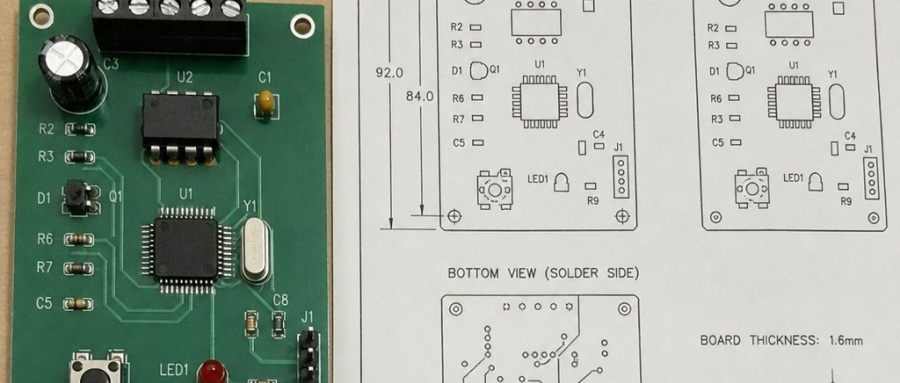
To get accurate quotes, give every prospective supplier the exact same controlled information. Package the following items:
Board Production Files: Fabrication data and drawings.
Bill of Materials (BOM): MPNs, quantities, reference designators, and approved alternatives.
Placement Information: Pick-and-place or centroid data.
Assembly Instructions: Unpopulated positions, variant differences, and special notes.
Commercial Context: Quotation quantities, delivery destination, and requested timing.
Avoid sending a mixture of released and draft documents without an explanation. Ask the supplier to acknowledge the exact revision used for their quotation.
Compare Quotations Against Your Actual Build
Make your comparison specific to the order you intend to place. Ask every shortlisted supplier to respond against the same files, quantities, and sourcing restrictions. Use a comparison sheet with columns for:
Included work vs. Exclusions
Assumptions made
Outstanding approvals
Delivery commitments
If one proposal includes a requested functional check, and another leaves testing undefined, ask both suppliers to quote the same test scope before ranking the totals.
Frequently Asked Questions (FAQ)
You typically need Gerber files, a Bill of Materials (BOM) with manufacturer part numbers, a pick-and-place file, and assembly drawings. If you have test requirements or firmware, include those as well.
Look for ISO 9001 (and ISO 13485 for medical) certifications, ask how they source components (authorized distributors only), and request a sample or pilot run before mass production. A good supplier will also offer a DFM review.
PCB fabrication creates the bare, empty circuit board. PCB assembly (PCBA) is the process of soldering electronic components onto that bare board to create a functional module.
Yes. A professional supplier will use authorized distributors to find pin-to-pin compatible alternatives. However, they must submit these changes for your engineering approval before production begins.
Share what you have and clearly mark it as preliminary. Ask the supplier to review the available data for early DFM risks, rather than treating draft files as final specifications.
Start Your PCBA Inquiry Today
Prepare a focused inquiry with your project stage, required quantity, current documentation, and requested service scope. Highlight your main constraint, whether that is an unresolved component or a strict delivery target.
Explore our one-stop PCBA services: https://www.fuxinpcba.com/one-stop-pcb-assembly-services/