
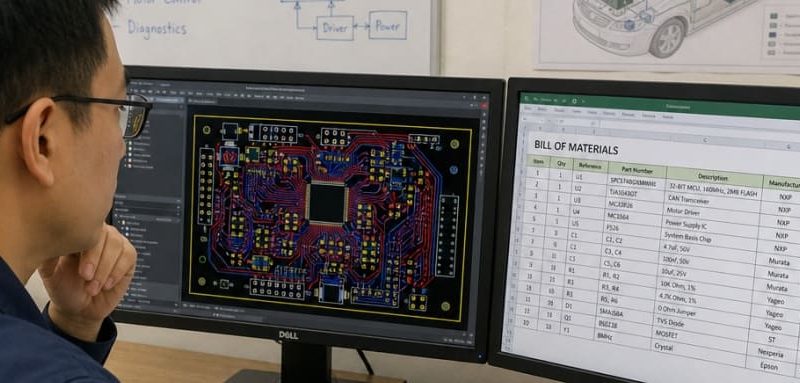
Automotive electronics PCBA manufacturing supports the control units, sensors, lighting systems, charging modules, comfort features, and safety-related electronics inside modern vehicles. At Fuxin PCBA, we work with automotive suppliers and product teams who need dependable electronic assemblies — not just boards that pass a bench test. This guide explains what to expect from automotive PCB assembly, how quality is controlled, and how to start an inquiry with the information buyers and engineers actually need. If you are preparing a PCB design for a vehicle program, the goal is simple: turn it into stable, traceable, production-ready hardware.
What Does PCBA Mean in Automotive Electronics?
PCBA means printed circuit board assembly: the completed board after components have been mounted, soldered, inspected, and prepared for integration into a larger product. In automotive programs, PCBA is not just a board with parts on it. It is an electronic assembly built to handle vibration, temperature variation, long service expectations, sourcing constraints, and supplier documentation requirements.
For vehicle electronics, the process usually starts with PCB design files, a bill of materials, and production requirements. From there, the manufacturer reviews manufacturability, sources components, assembles the board, inspects solder quality, tests agreed functions, and packages the finished assemblies for delivery. The goal is simple: reduce avoidable risk before the board reaches the vehicle system.
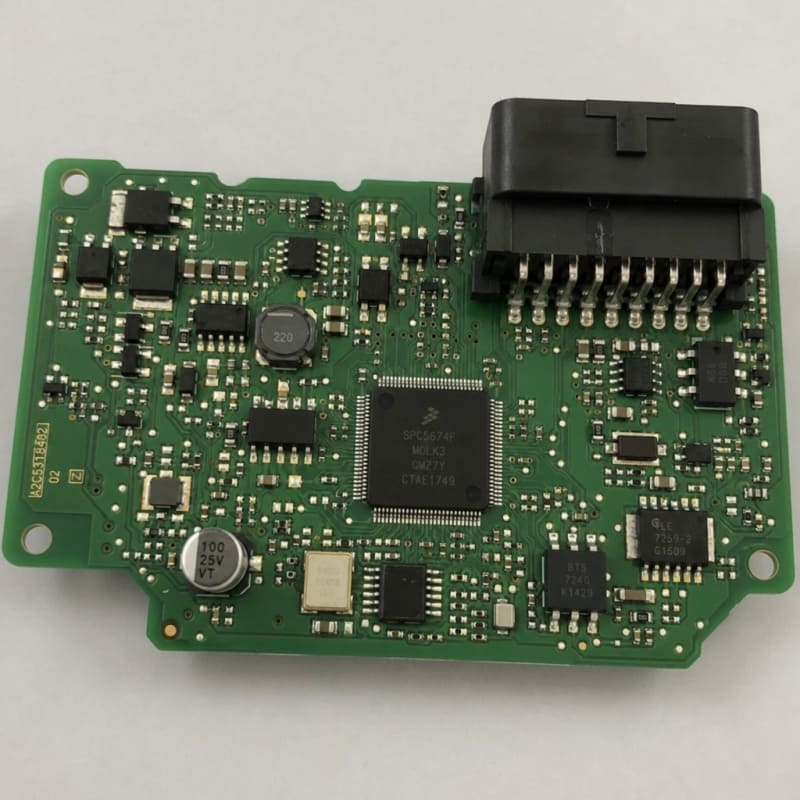
Applications of PCBA in Automotive Electronics
Automotive electronics PCBA is used wherever electrical control, sensing, signal processing, power distribution, or communication is needed inside a vehicle. Some assemblies are simple and cost-sensitive. Others require tighter process discipline because they support demanding operating conditions or long production cycles.
Common applications include:
Lighting electronics — LED headlamp modules, interior lighting controls, signal lighting, and ambient lighting boards.
Body and comfort systems — window controls, seat adjustment modules, HVAC control panels, smart entry systems, and dashboard electronics.
Power and charging modules — battery monitoring interfaces, DC power control boards, charging-related electronics, and power distribution assemblies.
Sensor and communication modules — parking sensors, camera interfaces, connectivity boards, and control electronics for in-vehicle networks.
Infotainment and user interface boards — displays, touch panels, audio modules, switches, and control panels.
A useful example is a lighting controller. The board may need stable solder joints, thermal considerations around LEDs or drivers, conformal coating if specified, and consistent component sourcing across repeated builds. A small change in one resistor, connector, or soldering profile can affect performance, so process control matters from prototype through volume production.
The Automotive PCB Assembly Process
A reliable PCB assembly process is built in stages. Each stage should make the next one easier, not create hidden problems that only appear after delivery. That is why good electronic manufacturing teams review files early and keep records throughout the build.
A typical process includes:
Engineering file review — Gerber files, pick-and-place data, BOM, drawings, test requirements, and special notes are checked for missing or conflicting information.
DFM and DFT feedback — the team reviews pad design, component spacing, polarity markings, panelization, test access, thermal needs, and assembly risks.
Traceable sourcing — components are purchased from approved or agreed channels. Alternatives are reviewed before use, especially for automotive components with long lifecycle expectations.
SMT and through-hole assembly — components are placed, soldered, and inspected using the process route agreed for the board. Mixed-technology assemblies may include SMT, wave soldering, selective soldering, hand assembly, or secondary operations.
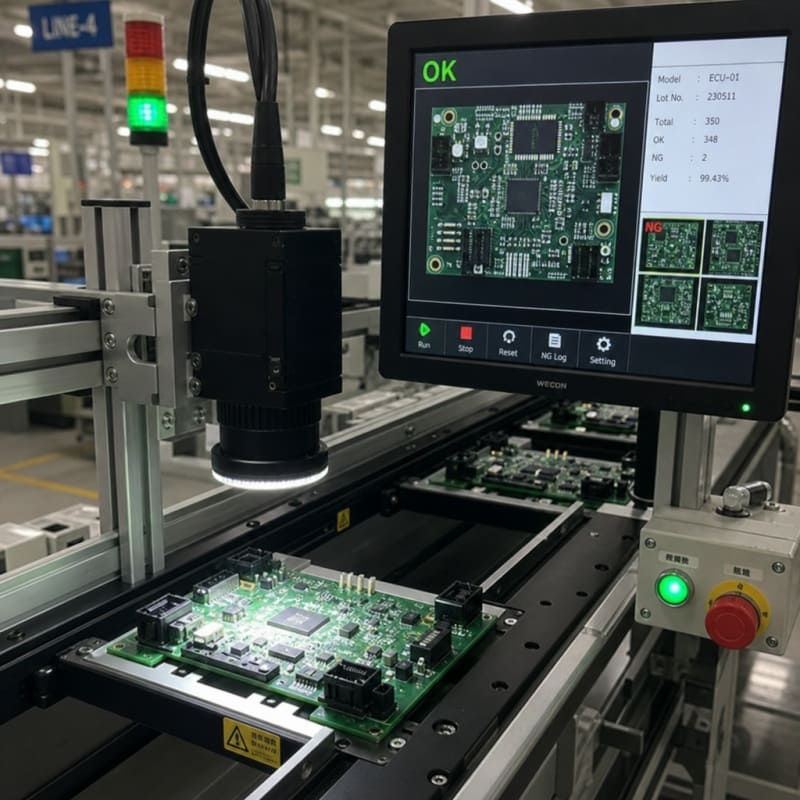
Inspection and testing — controls may include AOI, X-ray inspection for hidden joints, in-circuit testing, functional testing, visual inspection, and first article checks.
Final handling and shipment — finished electronic assemblies are cleaned if required, coated if specified, labeled, packed, and delivered with the agreed documentation.
Quality and Compliance for Automotive Supplier Requirements
Automotive buyers usually need more than assembled boards. They need confidence that each build follows a documented process and that production records can be reviewed if a problem appears later. Quality planning may include incoming inspection, first article verification, process parameters, lot traceability, change control, and final acceptance checks.
Supplier requirements vary by customer and program, so documentation should be discussed early. Many automotive programs refer to recognized quality and assembly expectations such as IPC workmanship criteria, PPAP or APQP-style planning, RoHS or REACH material expectations, IMDS data where required, and controlled handling for moisture-sensitive or ESD-sensitive parts. The exact package depends on your product, market, and customer requirements.
Useful documents to prepare for an inquiry include:
BOM with manufacturer part numbers and approved alternates
Gerber, ODB++, or other fabrication data
Pick-and-place file and assembly drawings
Schematic and test instructions, if available
Coating, cleaning, labeling, and packaging requirements
Target volume, forecast, and expected production schedule
Any customer-specific compliance or reporting requirements
Providing these details early helps the manufacturing team quote more accurately and identify technical concerns before they become schedule issues.
Common Risks in Automotive Programs, and Our Controls
Automotive programs often run into trouble when sourcing, process settings, or engineering changes are not controlled tightly enough. Even when the PCB design is sound, production can become unstable if component availability changes, inspection criteria are unclear, or test coverage is incomplete.
Key risks and practical controls include:
| Program risk | Practical control |
|---|---|
| Component shortages or substitutions | Approved alternates, sourcing review, and customer approval before changes |
| Solder joint defects | Profile control, AOI, X-ray where useful, and trained visual inspection |
| Hidden design-for-assembly issues | DFM review before production release |
| Inconsistent test results | Defined test procedure, fixtures where needed, and recorded acceptance criteria |
| Moisture or ESD damage | Controlled handling, packaging, and storage procedures |
| Unclear revision control | Documented engineering change review and build records |
These controls do not add value because they sound formal. They add value because they make decisions visible. When a connector becomes unavailable, when a pad design creates solder bridging, or when a test point is missing, the issue can be reviewed early instead of discovered after boards are already in use.
Process Controls That Protect Production Stability
Stable production depends on repeatable inputs. That means the same revision, the same approved component list, the same work instructions, and the same inspection expectations must carry through each build. For automotive electronics, this is especially important because many programs continue beyond a single purchasing cycle.
Process controls may include lot identification, controlled traveler documents, solder paste management, reflow profile records, operator training, inspection sampling plans, and nonconformance handling. For higher-risk assemblies, the build may also include first-piece approval, fixture validation, or additional functional checks. The best control plan is not always the most complicated one. It is the one that matches the board’s risk, use environment, and customer requirements.
Traceable Sourcing With Cost Control Options
Traceable sourcing helps protect quality, but cost still matters. A strong sourcing approach gives buyers clear choices without hiding risk. That may mean quoting original specified parts, identifying approved alternates, separating long-lead components, or recommending lifecycle checks before volume production.
Cost control can also come from design and planning. Consolidating passive components, improving panel utilization, reviewing connector choices, and selecting parts with better availability can reduce pressure on the program. These choices should be made before production release whenever possible, because late changes may require new approvals, test updates, and documentation revisions.
For buyers, the practical takeaway is to ask for options instead of only asking for the lowest unit price. A slightly different sourcing plan may reduce lead-time risk. A small PCB design adjustment may improve yield. A better test strategy may prevent expensive troubleshooting later.
A Real Example: When Sourcing Review Saved a Lighting Controller Program
One automotive lighting supplier came to us with a fully designed LED headlamp controller. The design was solid, but the BOM listed a driver IC with a 22-week lead time — well beyond the customer’s launch window. Our sourcing team flagged it during the pre-production review and proposed two drop-in alternates from approved manufacturers with the same pinout and thermal ratings. The customer tested one alternate and approved it within a week. The pilot build started on time, and the program moved into volume production without a redesign. That is what traceable sourcing with cost control actually looks like in practice.
Built for Engineers, Purchasing Teams, and Product Owners
This service is designed for teams that need automotive electronic assemblies built with practical manufacturing discipline. Engineers get early feedback on design-for-assembly issues. Purchasing teams get clearer sourcing paths and cost-control options. Product owners get a production route that is easier to scale, repeat, and document.
You may be a good fit if you need:
Prototype PCB assembly before committing to volume production
Low-to-medium or repeat production of car electronics
Support reviewing BOM risk, alternates, and component availability
Automotive supplier documentation aligned with your customer requirements
Assembly of mixed SMT, through-hole, cable, connector, or coated boards
A quote that separates technical risk from commercial assumptions
If your board is still in development, send the available files anyway. Early review can often identify simple layout or sourcing changes that make the final build easier.