
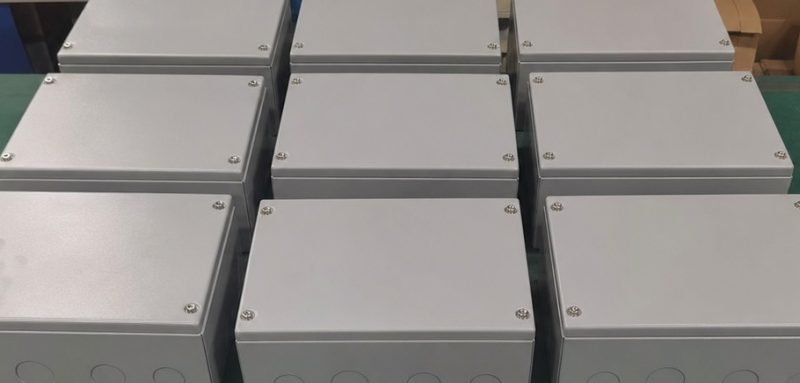
Your box build assembly process should move from parts to finished systems with fewer handoffs, clearer documentation, and less rework. Whether you need product assembly, electro-mechanical box build assembly, PCBA integration, packaging assembly, or full box manufacturing support, the right workflow helps protect quality while keeping production easier to quote, schedule, and scale. Use this page to identify what a capable assembly partner should help you organize before you request a build review or production estimate.
Is your assembly process ready for a cleaner, faster build?
A strong assembly process is ready when the bill of materials, drawings, PCBA requirements, mechanical details, test instructions, packaging needs, and revision controls all support the same end product. If your team is still chasing missing files, clarifying cable routing, or changing packaging after the first production run, your box build assembly may be carrying avoidable risk. A structured review can turn scattered requirements into a repeatable plan before procurement, assembly, and final shipment begin.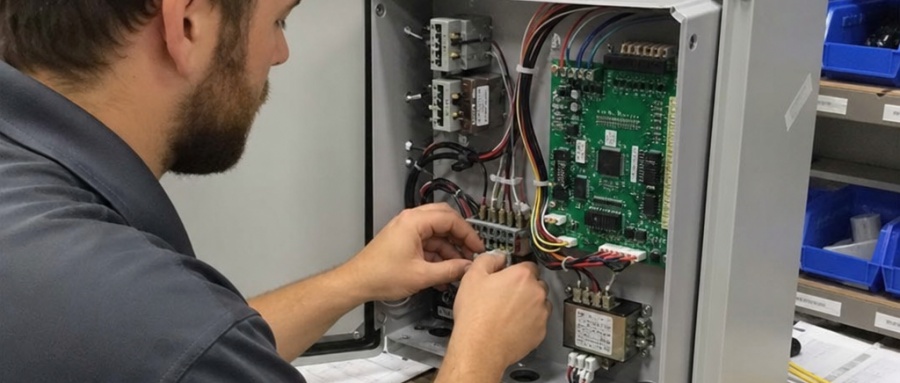
Turn complex box build assembly into a repeatable workflow
Box build assembly often sits between electronics manufacturing, mechanical assembly, and fulfillment. That makes it easy for small gaps to become expensive problems: a connector orientation missing from a drawing, a housing revision that does not match the PCBA, or packaging that protects the unit poorly during transport.
A better workflow starts by defining what “complete” means. For one product, that may mean a PCBA mounted into an enclosure with labels and basic packaging. For another, it may include cables, displays, fasteners, firmware loading, inspection, functional testing, serialized labels, and retail-ready packaging assembly. The goal is not to add process for its own sake. The goal is to make every build step visible, controlled, and easy to repeat.
A practical box construction plan can include:
- Complete BOM review for PCBAs, mechanical parts, wires, connectors, fasteners, labels, and packaging materials.
- Assembly documentation review covering drawings, work instructions, torque notes, cable routing, and revision status.
- PCBA turnkey assembly alignment so circuit boards, sourcing, testing, and final integration are planned together.
- Electro-mechanical integration planning for enclosures, harnesses, panels, switches, sensors, and user-facing components.
- Final inspection and packaging definition so the product leaves production in the condition your customer expects.
Support for every stage of product assembly
Effective product assembly is not just about putting parts together. It is about reducing uncertainty before the line starts. When documentation is clear and materials are aligned, operators can build consistently, procurement can source accurately, and engineering can respond to changes without disrupting the entire schedule.
For teams launching a new product, this means translating engineering intent into production-ready instructions. For teams improving an existing product, it may mean identifying where rework happens, where parts arrive late, or where final packaging causes delays. In both cases, the best next step is a process review that connects technical requirements with the realities of manufacturing.
Typical support areas include:
- Design-for-assembly review to spot avoidable fit, access, fastening, labeling, or routing issues.
- Material readiness planning to confirm long-lead, custom, or revision-sensitive components.
- Subassembly sequencing to determine which parts should be prepared before final box build assembly.
- Inspection checkpoints to catch issues before the finished system is closed, labeled, or packed.
- Packaging assembly planning to protect the product and simplify shipping, stocking, or customer delivery.
Build quality into the process before production starts
Quality is easier to protect when expectations are defined early. For electro-mechanical box build assembly, that often means combining customer drawings, workmanship expectations, test steps, and acceptance criteria into one usable production package. Without that package, the build can depend too heavily on tribal knowledge or last-minute clarification.
A quality-focused process may include incoming material checks, PCBA inspection, cable continuity checks, mechanical fit checks, label verification, and final functional testing where the product requirements support it. The exact controls should match the product, not a generic checklist. A simple enclosed controller will not need the same process as a complex instrument with displays, harnesses, sensors, and multiple configuration options.
To make your RFQ or build review easier to evaluate, prepare:
- Current BOM with manufacturer part numbers and approved alternates, if available.
- Assembly drawings, mechanical drawings, and enclosure specifications.
- PCBA files, test requirements, and programming instructions when applicable.
- Cable, harness, connector, and routing details.
- Labeling, serialization, barcoding, or compliance marking requirements.
- Packaging method, carton details, inserts, and shipment expectations.
- Known problem areas from prototype, pilot, or previous production runs.
Connect PCBA turnkey assembly with final box manufacturing
When PCBA turnkey assembly and box manufacturing are handled as disconnected steps, your team may spend extra time moving materials, resolving mismatched revisions, and coordinating responsibility across vendors. A more integrated approach gives the assembly partner visibility into how the board will be mounted, connected, tested, protected, and packaged.
This is especially valuable when the PCBA affects the mechanical build. Connector placement, heat management, cable strain relief, mounting hardware, and access to programming ports can all influence the final assembly process. Reviewing these details before production helps reduce preventable delays and makes it easier to move from prototype to repeatable builds.
A connected process can help your team:
- Reduce avoidable handoffs between electronics, mechanical, and packaging suppliers.
- Align board-level testing with final system-level verification.
- Improve revision control across PCBAs, enclosures, labels, and packaging.
- Simplify purchasing by grouping related materials and subassemblies.
- Create clearer accountability for finished, packed, and ready-to-ship units.
A practical path from review to production
A streamlined box build assembly project should feel organized from the first conversation. Instead of sending files into a black box, your team should know what will be reviewed, what questions may come back, and what information is needed to prepare a realistic quote or production plan.
A common engagement path looks like this:
- Share your build package. Provide the BOM, drawings, PCBA details, assembly notes, testing expectations, and packaging requirements you already have.
- Review gaps and risks. Identify missing files, unclear specifications, sourcing concerns, assembly constraints, or quality checkpoints that need definition.
- Confirm the process plan. Align on build sequence, inspection points, materials, packaging assembly, and any pilot-build needs.
- Quote and schedule the work. Use the clarified requirements to support a more accurate estimate and timeline.
- Build, inspect, and refine. Move through assembly with feedback loops that help improve repeatability for future runs.
This approach is useful whether you are building a small pilot batch, preparing for a production ramp, or improving a product that is already in the field.
Designed for teams that need dependable assembly support
This type of assembly support is a strong fit for OEMs, hardware startups, engineering teams, and operations leaders that need more than simple kitting. If your product includes electronics, enclosure hardware, wiring, labels, testing, and packaging, the process needs coordination across several disciplines.
It is also a fit when internal resources are stretched. Your engineers may be focused on design changes, customer requests, or new product development. A capable assembly process gives them a clearer manufacturing path without forcing them to manage every fastener, label, cable, and carton detail manually.
You may be ready for a build review if you are facing:
- Prototype builds that take too much engineering time.
- Repeat questions from production about the same assembly details.
- Rework caused by unclear drawings or incomplete instructions.
- PCBA and enclosure revisions that are difficult to coordinate.
- Packaging issues that create damage, delays, or inconsistent presentation.
- A need to move from manual builds to a more controlled assembly process.
Request a box build assembly review
If your current process depends on scattered files, late-stage fixes, or too much hands-on coordination, now is the right time to tighten the workflow. A focused review can help clarify what is needed for quoting, sourcing, assembly, inspection, and packaging before the next build begins.
Send your available documentation and describe your build goals, expected quantities, and current challenges. You do not need every answer before starting the conversation. The review process is designed to identify what is complete, what is missing, and what should be resolved before production.
Start with a build review or quote request today. Share your product assembly package and take the first step toward a cleaner, more repeatable electro-mechanical box build assembly process.